What is science and society?
The science and society major focuses on the ethics behind scientific research and practice. If you’re curious about how scientific advances shape society and how we understand and interact with each other and the world around us, this major could be a great fit.
What you'll learn
As you explore science, technology and society, you’ll receive a well-rounded education on topics like:
- historical scientific discoveries and how they have shaped our way of thinking
- how we understand our world and place in it
- laws and policies that shape society and lead to other scientific advancements (or hinder them)
Why study science and society at MSU?
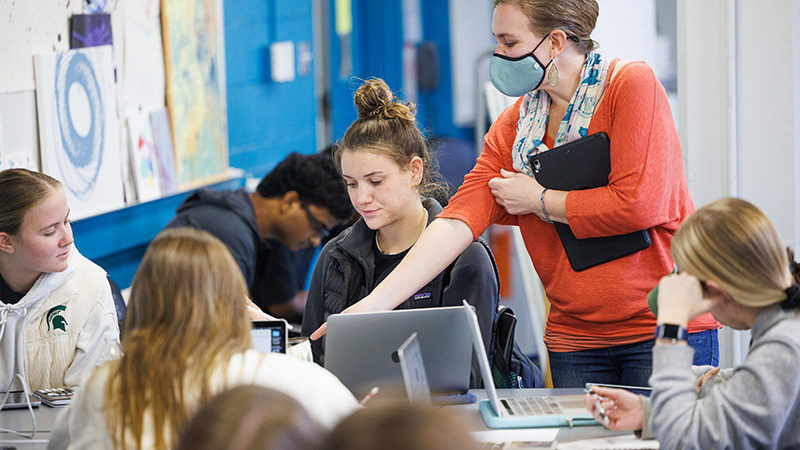
As a student in Lyman Briggs College, you’ll have access to the resources and benefits of a big research university, along with the support of a smaller living-learning college experience. You’ll build close relationships with peers and faculty and get personalized attention as you work toward your goals.
Studying science, technology and society at MSU can help prepare you to:
- pursue scientific research or a career in academia
- study science and its impacts from social, philosophical, medical, environmental, technological, or artistic perspectives
- pursue advanced study in areas like medical or environmental law, or work with government or nonprofit agencies focused on science and public good.
Hands-on learning opportunities
You’ll have access to hands-on opportunities, including undergraduate research and faculty-led education abroad and away classes. Course work is taught in a collaborative, interdisciplinary approach.
Student organizations and activities
Outside the classroom, you can connect with other students through opportunities like:
- Holmes Science Organization;
- Briggs Speaker Series;
- SciReview, MSU;
- SciComm MSU;
- A Look into the Lab.
And with more than 1,000 student clubs at MSU, you’ll have plenty of options to explore your interests and find your people.
Alumni pursuits
Alumni who studied science, technology and society go on to work in many different professional, academic and scientific fields.
Alumni work as:
- lawyers
- professors
- researchers
- environmental conservation activists
- scientific consultants
- public health professionals