What is earth and environmental sciences?
Earth and environmental sciences is all about understanding our planet — how it formed, how it works and how it's changing. You'll explore the rocks, water and ecosystems that shape the world around us and learn how they all connect. If you care about the environment and want real, hands-on experience in the field and lab, this major puts you right in the center of the action.
What you'll learn
By studying earth and environmental science, you'll develop practical skills that will set you apart.
You'll build expertise in:
- Critical thinking and scientific inquiry
- Real-world data collection and analysis, often using student-collected data
- Systems thinking across scales, time, and academic disciplines
- Confronting headline challenges, including climate, hazards, and resources
- Communication and collaboration
Why study earth and environmental sciences at MSU?
Studying earth and environmental sciences at MSU means powerful opportunities with a community that has your back.
Here's what sets the program apart:
- Learn by doing: You'll apply your developing field, lab, and quantitative skills through day and weekend trips, from sampling the water of the Red Cedar on campus to mapping the rocks of Michigan's Upper Peninsula
- Think big picture: Courses connect physics, chemistry, biology, math, and data science to understand the entire Earth system and its history
- Work alongside faculty: Many undergrads work as research assistants with faculty mentors in labs and in the field
- Funded from the first year: Alumni-sponsored scholarships and research fellowships are available for students as early as their first year
- Build your community: Form close bonds with peers through shared field trips, labs, and experiential learning
Specialized concentrations
Earth and environmental sciences gives you the freedom to tailor your degree toward environmental science, geology or planetary science — whatever excites you most — with fulfilling field, laboratory and communication requirements.
You can also add a geophysics minor, which digs into imaging and modeling to study materials and processes in the Earth's interior to solve real planetary and environmental problems. It's open to all MSU students.
Hands-on learning opportunities
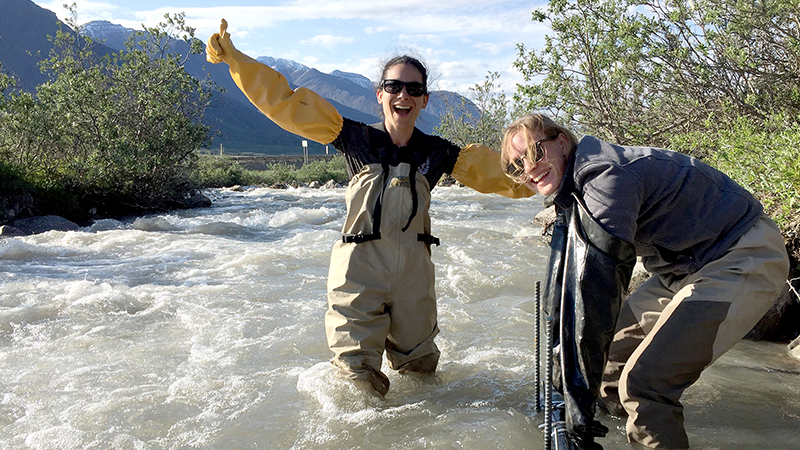
Students in earth and environmental sciences learn by doing — both in the classroom and out in the field. Required lab and field courses build real-world skills, and students have traveled as far as New Zealand, Iceland and Alaska for exciting research opportunities. This hands-on foundation prepares you to pursue prestigious undergraduate research and field opportunities.
Student organizations and activities
Outside the classroom, you can connect with other students who share your interests through clubs. Membership is open to all students.
Clubs include:
- Astrobiology Club
- Mineralogical Society of America student club
- American Institute of Professional Geologists student chapter
- Geology Club
Th Geology Club has led field trips in Michigan and beyond for decades. Annual activities include science nights at local schools and fundraising.
These groups offer chances to learn, lead, and have fun. And with over 1,000 student clubs at MSU, these are just the beginning. You'll have plenty of opportunities to find your niche and your people.
Alumni pursuits
Graduates with an earth and environmental sciences degree work in the private sector, government and academia. Students who major in earth and environmental sciences go on to work in a wide variety of sectors including nonprofit, academia, government, industry and research.
Alumni work as:
- Geoscientists and geologists
- Environmental consultants
- Meteorologists and atmospheric scientists
- Oceanographers and marine scientists
- Planetary scientists
- Environmental lawyers
- Museum curators
- Paleontologists
You can also combine your interests with your education to chart a path all your own!